
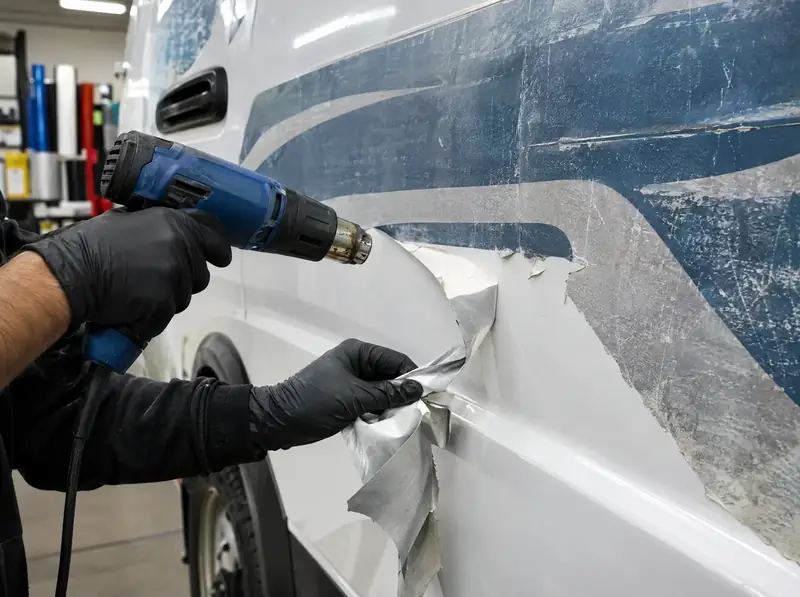
Vehicle wrap removal is the process of warming old vinyl graphics until the film releases, peeling it away at a low angle, then cleaning off leftover adhesive so the paint is ready to sell, return or re-wrap.
Vinyl that's within its rated life usually lets go cleanly with gentle heat. Film that has baked in the sun for years is a different job: it turns brittle, comes away in small flakes and leaves more adhesive behind. That's why removal is priced from photos, because the age, type and condition of the film matter more than the size of the vehicle.
We take wraps, part wraps, livery and lettering off cars, vans and trucks, whether the vehicle is going back to a lease company, being sold or getting new graphics. The aim is clean panels with no adhesive residue, ready for a valet, inspection or re-wrap. If the paint shows any sign of lifting, we stop and talk to you before carrying on.
How is a vehicle wrap removed?
The film is warmed with a heat gun until the adhesive softens, then peeled back slowly at a low angle so it releases from the paint rather than tearing. Plastic tools lift stubborn edges, and blades are kept off the paint.
Once the film is off, adhesive left on the panels is softened with a vehicle-safe adhesive remover and wiped away, then the panels are cleaned down so they're ready for a valet, inspection or new graphics. Window film and lettering on glass come off the same way, with extra care near heated rear-screen elements.
- Warm a small area and test how the film releases
- Peel low and slow, re-heating as needed
- Remove adhesive residue and clean the panels
- Check the paint and note any ghosting or marks
What is ghosting, and can it be reduced?
Ghosting is a faint outline of old graphics left on the paint after removal. It happens because paint around lettering or a part wrap has been exposed to sun for years while the paint underneath was covered, so the two areas have aged differently.
It's most noticeable when graphics have been on a long time on a vehicle parked outdoors. Machine polishing by a valeter or paint specialist can often reduce mild ghosting; deeper cases may only disappear when the panel is repainted or covered with new graphics. We point it out when the film comes off, so you can decide before a sale or lease return.
- Mild ghosting: often improved by machine polishing
- Strong ghosting: may need paintwork or new graphics
- Either way: plan for it before a lease inspection
Can removing a wrap damage the paint?
On sound factory paint, with film that's still within its rated life, careful removal usually leaves the paint as it was. The risk comes from paint that isn't firmly bonded to the panel: cheap resprays, smart repairs, lifted or flaking lacquer, chips and rust.
In those areas the film's adhesive can grip more strongly than the paint does, so paint or lacquer comes away with the vinyl. We look for warning signs before starting, test-peel any doubtful panels and stop to talk to you if paint starts to lift, rather than carrying on regardless. Tell us about anything you already know of:
- Previous bodywork or resprays
- Lacquer peel or fading at panel edges
- Chips, scratches or rust under the film
- Film that is well past its rated life
How should you plan removal for de-fleet or lease return?
Book removal well before the vehicle goes back, not in the week of collection. That leaves time to deal with ghosting, residue or minor paint issues, and to arrange a valet before the inspection.
Check the lease's return conditions first. They usually say how graphics must be removed and how marks are charged, and they're the standard your vehicle will be judged against. For fleets, removal is easiest in batches matched to return dates, and fitting records showing what was applied, and when, help answer any questions from the lease company.
- Find the lease return date for each vehicle
- Book removal with time left for polishing or repairs
- Keep dated photos of the panels after removal
- Update the V5C if the original colour is restored
Why remove old graphics before a re-wrap?
New film needs a clean, smooth surface to bond to. Wrapping over old vinyl means the edges of the old graphics show through as ridges, the new film is only as secure as the old film's adhesive, and both layers then have to come off together at the end.
Removing old graphics first lets the fitter check the paint, deal with ghosting and residue, and give the new wrap a sound base. When old livery comes off and new goes on as one booked job, the vehicle is out of service for less time overall. Lettering on top of a sound wrap is the exception, because it can sometimes be changed without stripping the wrap underneath.
- Old film off, and the paint checked and cleaned
- Ghosting or adhesive residue dealt with
- New wrap fitted on a sound, smooth base
Options and finishes
Lettering removal
Cut vinyl names and contact details taken off and the adhesive cleaned away.
Part graphics removal
Logo panels, stripes or printed sides-and-rear graphics removed.
Full wrap removal
All wrapped panels stripped and cleaned, ready for return, sale or re-wrap.
Window film removal
One-way vision and lettering taken off glass without blades near heater lines.
Chevron and reflective film removal
Thicker retroreflective markings, which usually take longer than standard vinyl.
Removal and re-wrap
Old livery off and new graphics on as one booked job.
How much does vehicle wrap and graphics removal cost?
Guide prices start from £245 + VAT for removing lettering or part graphics, typically up to £450 + VAT. Full wrap removal is typically between £450 and £795 + VAT.
The biggest factors are the age of the vinyl, whether it's cast or calendered film, and how much sun damage it has taken: brittle, cracked film takes far longer than film that peels in sheets. Vehicle size, the amount of adhesive left behind and any reflective film also count. Guide prices exclude VAT, and the final figure is confirmed from photos of the film's condition.
| Item | Guide, ex VAT | Inc. VAT (20%) |
|---|---|---|
| Lettering or part graphics removal | £245 – £450 | £294 – £540 |
| Full wrap removal | £450 – £795 | £540 – £954 |
Guide prices exclude VAT and are confirmed after survey or artwork check. Basis: heat-assisted removal of vinyl graphics or wraps and adhesive clean-down.
Permission and rules
Removing graphics isn't usually a council matter. The point to watch is the V5C: if the wrap being removed changed the vehicle's main colour and DVLA was told at the time, update the colour back with DVLA and tell your insurer. Removing lettering or a part wrap over the original colour doesn't change the record. On a leased vehicle, check the return conditions for how graphics must be removed and how marks are charged. If the vehicle works on the highway, check whether your contract still needs Chapter 8 markings before they come off. These points are the same whether the vehicle is kept in England, Wales, Scotland or Northern Ireland.
Specification at a glance
| Typical size | From lettering on a small van to full wraps on long-wheelbase vans and trucks |
|---|---|
| Materials | Cast and calendered vinyl, laminates, perforated window film and reflective markings |
| Typical lifespan | Removal is easiest while film is within its rated life; older film takes longer |
| Typical lead time | typically a day per van for a full wrap; lettering typically a few hours |
| Fixing / installation | Controlled heat, low-angle peel, plastic tools and vehicle-safe adhesive remover |
| Consent | Not usually a council matter; change the V5C back if the colour is restored |
Before you ask for a quote
- Clear photos of every side, plus close-ups of cracked, faded or peeling film
- Roughly how old the graphics are, and whether they're a wrap or lettering
- Whether the vehicle is going back to a lease company, being sold or re-wrapped
- Any return or inspection date you're working to
- Known paint issues under the film: resprays, chips, rust or lacquer peel